Not every approach is built for people who think like this. This one is.
People who think deeply tend to arrive at this kind of work having already tried other approaches. Not because those approaches were wrong, but because they addressed the thinking without addressing what was underneath it. My work is about what is underneath it, and why this practice exists.
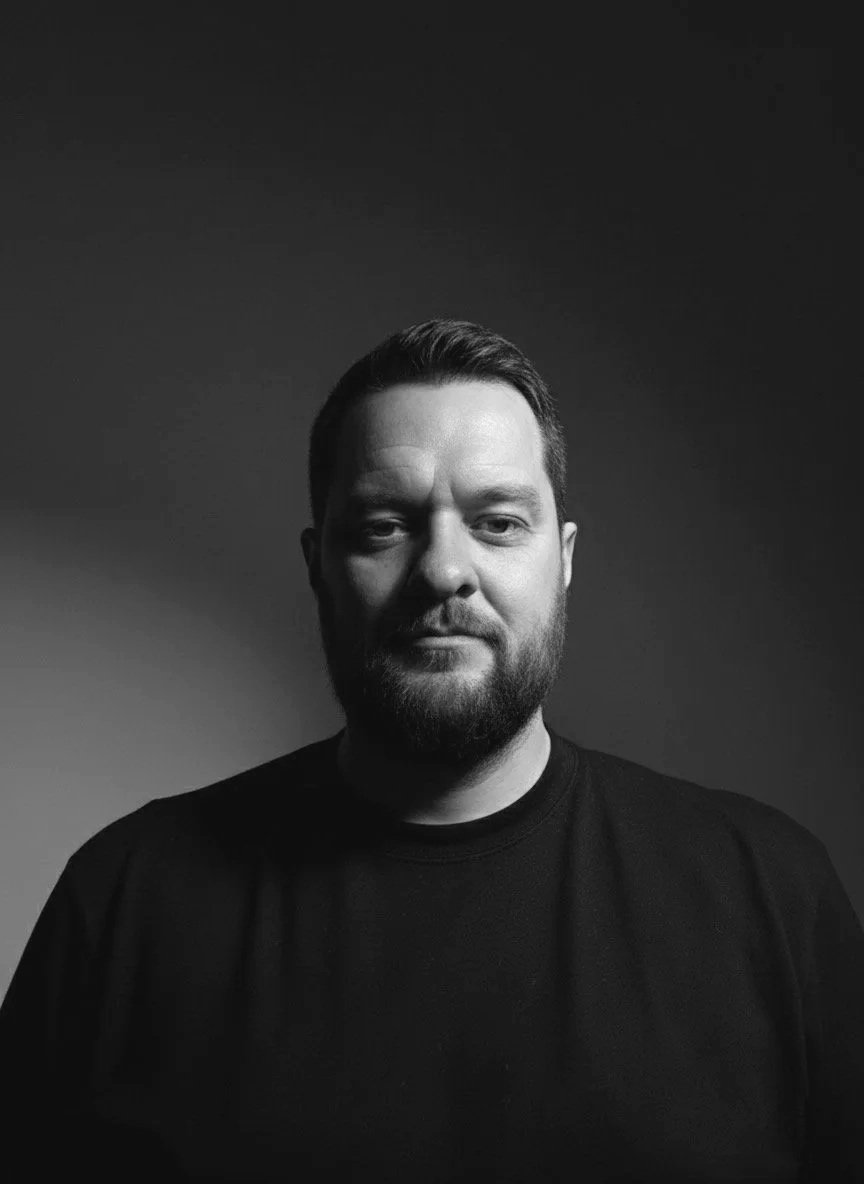
I'm Gareth, the founder of Us Together. My background in psychology and neuroscience is academic, studied to postgraduate level with a clinical specialism. Before this I spent a number of years as a teacher. That combination shapes how I work, making research usable in a conversation rather than presenting it as a lecture.
The philosophical foundations I’ve used for this framework provide specific points this work will lean on. Each tradition does a different job.
Camus's absurdism is used as a distancing mechanism. Before a situation can be examined, it needs to be seen without full emotional investment. Camus's position, that life offers no inherent justification and must be engaged with anyway, produces a kind of dark humour that creates space between a person and their immediate reaction. That space is where the examination begins.
Stoic philosophy provides the method for what comes next. Not the popular reduction of stoicism to tolerating difficulty without complaint, but the disciplined practice of honest self-examination. The questions the Stoics considered worth sitting with: what you actually value, what is within your reach, what the current situation is costing you, and whether what you are pursuing is worth what it demands.
Frankl's logotherapy provides the direction. His argument, developed partly from Nietzsche's observation that a person who has a reason to live can bear almost any how, is that progress becomes possible when there is something to move toward. Us Together began there.
This practice did not begin as a professional exercise. It began from a period in which the questions about direction, purpose and whether any of it mattered became harder to carry than the practical circumstances surrounding them. The practical circumstances were significant. But the existential weight was the more consuming burden.
The framework used in sessions was developed and tested in those conditions before it was used with anyone else. That is relevant not because it suggests those conditions ended, but because it means the work is grounded in something other than theory. These are conditions that require ongoing management. What the framework provided, and continues to provide, is a way of directing thinking and behaviour toward something concrete, rather than allowing the conditions to set the direction.
That history also informs how this practice sits in relation to clinical support. Traditional therapeutic and psychiatric support is not a stepping stone to be left behind. For many people it is essential, the thing that stabilises acute distress, manages symptoms, and creates the conditions in which deeper work becomes possible at all. Us Together begins in that space.
The question this work addresses is not what is wrong with your thinking. It is why your thinking keeps returning to the same thoughts even when the pressure has lifted. That persistent return is often not a symptom of illness. It is the mind circling an unexamined question about meaning, direction, identity or purpose.
Addressing that question requires both reflective examination and an honest evaluation of your own agency in it. Not by replacing the thinking with better thinking, but by understanding how you think, why you think it, and what it is actually pointing toward. The result is not dependence on a framework or a practitioner. It is an expanded capacity to meet future difficulty from a position of self-knowledge. Adaptation rather than reliance. Agency owned rather than outsourced.
This is not a practice built around managing symptoms or keeping you coming back. Most clients work weekly. We stop when the work has done what it set out to do. The aim is always that you leave with something you can use on your own.